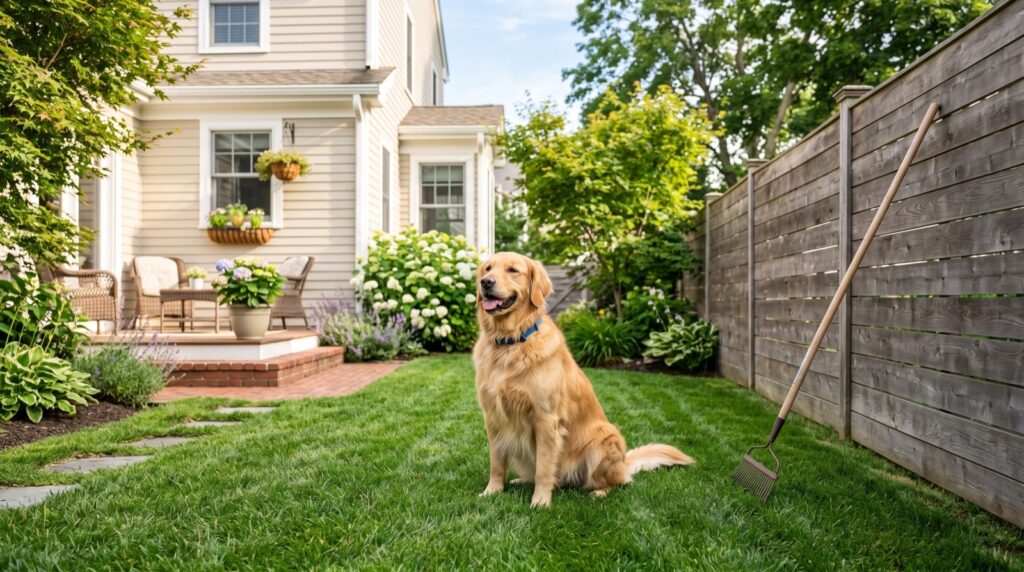
A clean yard isn’t just about appearances. Dog waste left sitting around attracts flies, burns patches into your grass, carries bacteria that can linger for months, and quietly makes your outdoor space unusable. Most owners know they should stay on top of it, but the cleanup itself is awkward enough that it gets put off. That’s exactly the problem worth solving. With the right scooper and the right bags, daily pickup takes a couple of minutes and stays genuinely mess-free. Here’s how to make that happen without overcomplicating it.
There’s a surprising amount of bad advice out there about cleaning up after dogs, and a lot of poorly made products that make an easy job harder than it needs to be. Thin bags tear, short-handled tools force you to crouch, and hinged scoopers jam the moment they get dirty. None of that is necessary. Good design solves all of it. This guide covers what actually matters when choosing cleanup gear, how to use it well, and the small habits that keep a yard clean, healthy, and pleasant to spend time in year-round.
Multi-Dog Households Need Better Tools
Cleanup difficulty doesn’t scale in a straight line with the number of dogs – it compounds. Two or three dogs produce enough waste that a small, awkward tool turns a quick task into a genuine daily ordeal, and inadequate bags mean multiple trips back and forth. Capacity becomes the limiting factor. A scooper that holds a decent volume and bags built to take real weight let you clear the whole yard in one pass rather than several. For anyone with more than one dog, investing in properly sized cleanup equipment pays back in saved time and frustration almost immediately.
Reach and Posture Matter More Than You Think
Most people underestimate how much bending affects their willingness to clean up regularly. A short-handled scooper forces you to crouch for every pickup, which is uncomfortable at best and genuinely painful if you have back or knee problems. A long-handled tool lets you stand fully upright, work quickly, and cover the whole yard without strain. That comfort directly translates into consistency, because a task that doesn’t hurt is one you’ll actually do daily. For older owners, anyone with mobility issues, or people with several dogs, good reach isn’t a luxury feature – it’s the difference between staying on top of it and giving up. That’s exactly what a proper heavy duty tool bag is built for.
Cleanup on Walks vs Cleanup at Home
These are genuinely different jobs, and using the wrong approach for each makes both harder. On walks, you need something compact, quick, and easy to carry with one hand while managing a leash – here, good bags do most of the work. At home in the yard, you’re covering more ground and dealing with accumulated waste, so a proper long-handled scooper saves enormous time and effort. Many owners try to use one solution for both and end up frustrated with each. Recognising that walks and yard cleanup have different demands, and equipping yourself accordingly, makes both routines dramatically smoother.
Why Simple Designs Outlast Complicated Ones
Scoopers with springs, hinges, jaws, and moving parts look clever in product photos, but those mechanisms are exactly what fails. Debris jams them, moisture corrodes them, and repeated use loosens them until they no longer close properly. A simpler design with fewer failure points lasts dramatically longer and works just as well in practice. Durable materials matter too: a tool that sits outside through rain, sun, and frost needs to handle that without cracking or rusting. When you’re buying cleanup gear, resist the temptation to pay for complexity. Sturdy and straightforward almost always beats clever and fragile. Quality and consistency count across the board, including with dependable specialists.
What to Look For When Buying
A few practical criteria separate cleanup tools worth owning from ones you’ll replace within months. Look for a handle long enough that you stand upright, construction sturdy enough to survive being left outdoors, a design with minimal moving parts, and bags thick enough that they never tear or leak. Ease of cleaning matters too – anything that traps residue becomes unpleasant fast. It’s also worth checking that the tool suits your dog’s size and your yard’s terrain, since gravel, grass, and patio each behave differently. Spending slightly more on gear that lasts is consistently cheaper than replacing cheap equipment repeatedly.
The Problem With Cheap Bags
Thin, low-cost waste bags are the single most common source of cleanup frustration. They tear at the worst possible moment, stretch until they’re useless, and often can’t be tied securely, which defeats the entire purpose. Many are also far too small for larger dogs or multi-dog households. A properly heavy-duty bag holds its shape, resists punctures from sticks and gravel, and seals reliably so nothing leaks on the walk to the bin. The price difference per bag is genuinely tiny, but the difference in daily experience is enormous. This is the easiest upgrade any dog owner can make. Many dog owners solve this for good with Pooper scooper.
Key Takeaways
- Multi-Dog Households Need Better Tools: Cleanup difficulty doesn’t scale in a straight line with the number of dogs – it compounds.
- Reach and Posture Matter More Than You Think: Most people underestimate how much bending affects their willingness to clean up regularly.
- Cleanup on Walks vs Cleanup at Home: These are genuinely different jobs, and using the wrong approach for each makes both harder.
- Why Simple Designs Outlast Complicated Ones: Scoopers with springs, hinges, jaws, and moving parts look clever in product photos, but those mechanisms are exactly what fails.
- What to Look For When Buying: A few practical criteria separate cleanup tools worth owning from ones you’ll replace within months.
- The Problem With Cheap Bags: Thin, low-cost waste bags are the single most common source of cleanup frustration.
The Bottom Line
Dog ownership comes with responsibilities, and cleanup is the one that shows up every single day. Treat it as basic hygiene rather than an optional chore, equip yourself properly, and it stops being a burden. Your lawn stays healthy, your family stays safe, and you get to spend your time enjoying your dog instead of cleaning up after them.
A clean yard is better for your grass, safer for your family, and far more pleasant to spend time in. None of that requires more effort – just better equipment and a consistent routine. Once daily pickup becomes automatic and your tools actually work properly, the whole job quietly disappears into the background of owning a dog.